Source Adjustable Garlic Planter for Forestry, Agriculture, and Farms
Find 30 adjustable garlic planter options with dual seeding and fertilization capabilities for tubers and trees. Buyers can compare semi-automatic models from Shandong, China, featuring tractor power sources and customizable row configurations for efficient sowing.
Key considerations
Products List






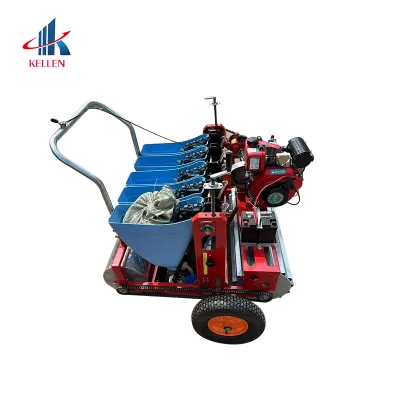
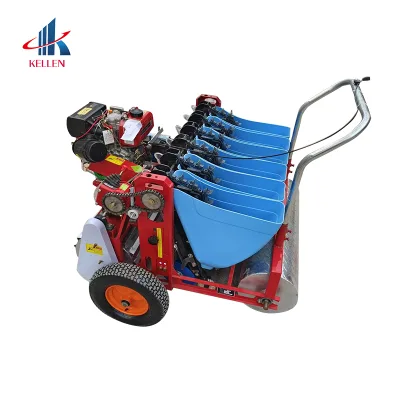
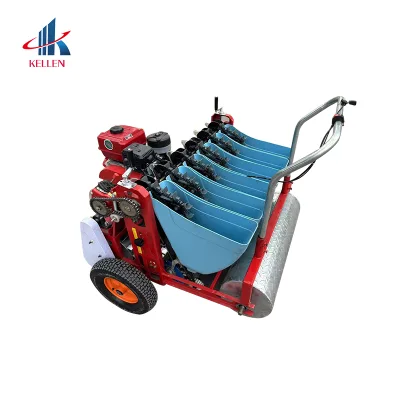
Comprehensive Sourcing Guide
Sourcing Guide for Adjustable Garlic Planters
Understanding the Technical Architecture of Garlic Planting Equipment
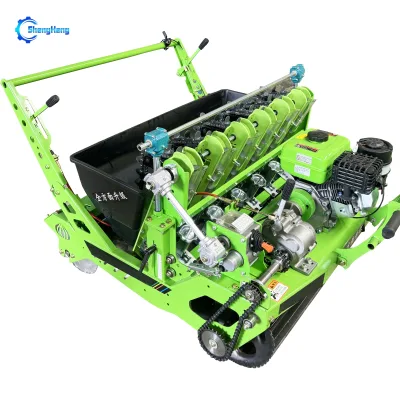
When sourcing an adjustable garlic planter, buyers must first distinguish between general agricultural machinery and equipment specifically engineered for the unique requirements of bulb crops. The core keyword "adjustable garlic planter" implies a machine capable of varying row spacing and depth to accommodate different garlic varieties and soil conditions. Based on observed product attributes, the functional architecture of these machines typically centers on a "Dual Seeding and Fertilization" mechanism. This integrated approach allows for the simultaneous placement of seed cloves and the application of fertilizer, a critical efficiency factor for large-scale operations. The mechanization level observed in the market is predominantly "Semi-Automatic," suggesting that while the machine requires a power source to operate, it may still involve some manual oversight for loading or adjustment.
The power source for these units is consistently identified as a "Tractor," indicating that the planter is a towed or mounted implement rather than a self-propelled vehicle. This dependency on tractor compatibility requires buyers to verify their existing fleet's horsepower and hydraulic output before procurement. The physical application scope is broad, covering "Tubers" and "Trees," yet the specific product naming often highlights "Garlic Sowing" as the primary use case. The planting mechanism itself is described as a "Drilling Seeder," which suggests a method of placing seeds into a pre-formed furrow rather than broadcasting.
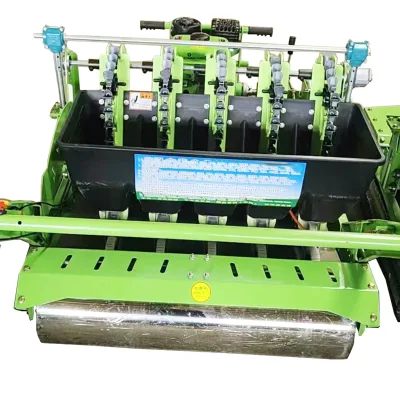
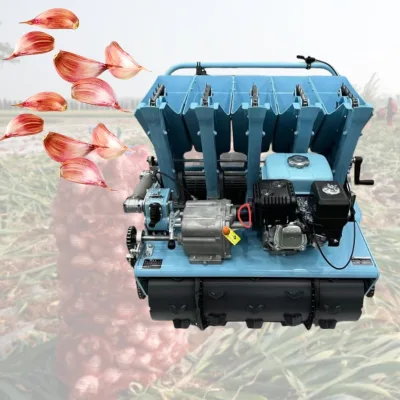
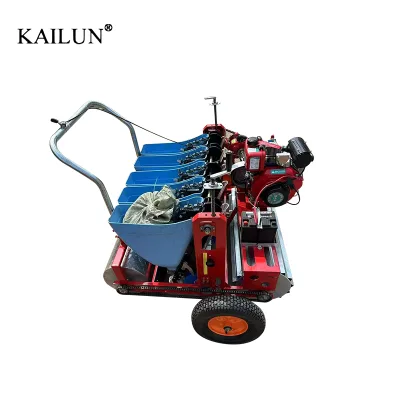
A critical technical variable is the "Ditching Mode," which is observed as "Continuous Ditching." This feature ensures a steady flow of soil displacement, reducing the risk of clumping that can occur with intermittent digging methods. The machine's physical configuration allows for varying row counts, with observed standards ranging from "2-8 rows" and specific model numbers offering "3 4 5 6" rows. This adjustability is the defining characteristic of the "adjustable" aspect of the keyword, allowing farmers to optimize land use based on field width and crop rotation needs. The material composition is primarily "Metal," with specific mentions of "Aluminium Alloy" (grades 6063-T5/T6) and "Iron Net Box" or "Wooden Cases" for packaging, suggesting a focus on durability and corrosion resistance.
Compliance and Certification Verification Protocols
In the B2B machinery sector, certification is not merely a formality but a prerequisite for market access and operational safety. When evaluating potential suppliers for garlic planters, buyers must rigorously verify the presence of specific certifications. The observed product data lists a high-confidence set of certifications including "CE," "ISO9001," "GMP," "QS," and "UL." Each of these serves a distinct purpose in the supply chain. The "CE" marking indicates conformity with health, safety, and environmental protection standards for products sold within the European Economic Area. "ISO9001" certifies that the manufacturer has a quality management system in place to ensure consistent product quality.
The "UL" certification is particularly relevant for electrical components or safety standards in North American markets, ensuring the machinery meets rigorous safety benchmarks. "GMP" (Good Manufacturing Practice) and "QS" (Quality Safety) are often associated with food-grade equipment or agricultural inputs, ensuring that the machinery does not introduce contaminants into the food supply chain. However, buyers must be cautious. While these certifications are listed as high-confidence facts for certain products, they are not universal guarantees for every unit in the market. The presence of "QS" is noted multiple times, but the "reach" certification appears only in low-confidence background data and should not be relied upon for concrete claims.
Furthermore, the "prod_standard" field indicates a standard of "AA10 aluminium ingot" for specific components, which implies a material quality benchmark. Buyers should request valid certification documents directly from the supplier rather than accepting marketing claims at face value. The origin of the machinery is frequently cited as "Dezhou" or "Shandong China," regions known for agricultural machinery manufacturing. While the location provides context for the supply chain, it does not automatically confer certification status. Verification should focus on the specific batch or model number to ensure that the claimed "CE" or "ISO9001" status applies to the exact unit being purchased.
Cost Drivers and Pricing Structure Analysis
The pricing of adjustable garlic planters is influenced by a complex interplay of factors, including mechanization level, row capacity, and material quality. The observed listed price range in the market spans from 50 to 2000 USD. This wide variance suggests a significant difference in product tiers, likely driven by the number of rows, the complexity of the "Dual Seeding and Fertilization" system, and the inclusion of core components like "PLC," "Engine," "Bearing," "Gearbox," and "motor." A unit priced at the lower end of the spectrum may be a basic, single-row or two-row model with minimal automation, while a unit at the higher end likely features a full-size fertilizer system, advanced control mechanisms, and higher row counts.
The Minimum Order Quantity (MOQ) is another critical cost driver. The observed MOQ range is 1 to 200 units. For buyers seeking a single unit for a small farm, an MOQ of 1 is essential. However, for larger agricultural enterprises or distributors, an MOQ of 200 may be required to access the lower price points or specific customization options. The "Selling Units" are listed as "Single item," which supports the flexibility for smaller purchases, but the high MOQ of 200 for certain configurations indicates that bulk pricing strategies are common in this sector.
Additional cost factors include the "Delivery Time," which is observed as "20-30 days After Receiving The Deposit." This lead time affects the total cost of ownership when factoring in inventory holding costs or the urgency of the planting season. The "Nearest Port" is identified as "Qingdao," which is a major shipping hub. Buyers should consider freight costs from this port to their destination, as shipping heavy machinery like a "120 kg" unit can significantly impact the final landed cost. The "Payment" terms are typically "T/T" (Telegraphic Transfer), which is standard but requires buyers to manage cash flow and payment security carefully.
Typical Applications and Operational Scenarios
The application scope of adjustable garlic planters extends beyond simple garlic sowing, encompassing a broader range of agricultural activities. The primary application is "Garlic Sowing," but the machinery is also designed for "Tubers" and "Trees," indicating versatility in handling various bulb and root crops. The "Application Field" includes "Forestry," "Agriculture," "Livestock," and "Aquaculture," suggesting that these machines can be adapted for different environments, although the core design is optimized for crop production.
The "Applicable Industries" are listed as "Agricultural Sowing" and "Farms," reinforcing the target demographic of commercial and semi-commercial agricultural operations. The machine's ability to handle "Flowers/Plants" as well as "Garlic" highlights its potential for use in horticulture and nursery settings. The "Use Type" is described as "Floor Type," which may refer to the mounting configuration or the operational stance of the machine, though this term requires clarification in specific technical datasheets.
The "Shape" of the machine is "Rectangular," and the "Size" is noted as "Small," which implies portability and ease of storage. The "Distance" between rows is adjustable, with observed settings of "5cm 10cm 15cm." This adjustability is crucial for different garlic varieties, which may require different spacing for optimal bulb size and yield. The "Finishing" process involves "Powder Coated" treatment, which provides protection against rust and corrosion, essential for machines that operate in wet soil conditions. The "Condition" of the products is consistently "New," ensuring that buyers receive machinery with full operational life and no hidden wear.
Supplier Evaluation and Brand Assessment
Evaluating suppliers for garlic planters requires a focus on brand reputation, component quality, and after-sales support. The observed brand name in the market is "shengheng machinery," which serves as a reference point for buyer research. However, buyers should not limit their search to a single brand but rather evaluate multiple suppliers based on their ability to meet the specific technical requirements. The "Core Components" of these machines include "PLC," "Engine," "Bearing," "Gearbox," "motor," and "Gear." The quality of these components is a primary indicator of the machine's longevity and performance. Buyers should inquire about the manufacturers of these core parts, as high-quality brands in these categories often correlate with better overall machine reliability.
The "Customization" feature is listed as "Available," which is a significant advantage for buyers with specific needs. This could include modifications to row spacing, fertilizer application rates, or mounting configurations. However, customization often extends lead times and may increase costs. Buyers should assess the supplier's flexibility and willingness to accommodate specific requests without compromising the machine's structural integrity. The "Marketing Type" is noted as "New Product 2020," which suggests that the technology may have been introduced or updated around that time. Buyers should verify if the current models incorporate more recent advancements or if they are still based on the 2020 design.
The "Place of Origin" is consistently "Shandong China," a region with a well-established agricultural machinery industry. While this provides a baseline for manufacturing capability, buyers should still conduct due diligence on the specific factory's capacity and quality control processes. The "Weight" of the machine is observed at "120 kg," which is a manageable size for transport but requires appropriate lifting equipment for installation. The "Single gross weight" is listed as "1.900 kg," which seems inconsistent with the total weight and may refer to a specific component or packaging weight; this discrepancy highlights the need for buyers to request detailed weight specifications for the entire unit.
Quality Control and Long-Term Procurement Considerations
Ensuring the quality of an adjustable garlic planter involves a multi-layered approach to inspection and verification. The "Warranty" period observed is "3 months," which is relatively short for heavy machinery. Buyers should negotiate for extended warranty periods or clarify what is covered during this term. The "Video Outgoing Inspection" is "Provided," which allows buyers to visually verify the condition of the machine before shipment. This is a valuable tool for remote buyers to ensure that the product matches the description and has no visible defects.
The "Product Name" is consistently "Garlic Planter," but the "Model Number" is listed as "other," indicating a lack of standardized naming conventions across suppliers. This makes it difficult to compare models directly, and buyers must rely on detailed specifications rather than model numbers. The "Single package size" is "25X25X25 cm," which seems small for a 120 kg machine and may refer to a specific component or accessory. Buyers should verify the actual packaging dimensions to ensure safe transport and storage.
Long-term procurement considerations include the availability of spare parts and the supplier's ability to provide technical support. The "Core Components" list suggests that parts like "Gearbox" and "Bearing" are critical and may require replacement over time. Buyers should ask about the lead time for spare parts and the cost of maintenance. The "Payment" terms of "T/T" require careful management of funds, and buyers should consider using escrow services or letters of credit for larger orders to mitigate financial risk.
The "Delivery Time" of "20-30 days" after deposit receipt is a standard lead time, but buyers should account for potential delays due to customs, shipping, or production bottlenecks. The "Nearest Port" of "Qingdao" is a major hub, but buyers should confirm the specific shipping route and transit time to their destination. Finally, the "Key Selling Points" of "High-accuracy" suggest that the machine is designed for precision planting, which is essential for maximizing crop yield. Buyers should verify this claim through independent testing or user reviews to ensure that the machine delivers on its promises.
Strategic Procurement and Risk Mitigation
Strategic procurement of adjustable garlic planters requires a balanced approach that considers technical specifications, cost, and risk. The wide price range of 50-2000 USD and the varying MOQs from 1 to 200 units offer flexibility but also complexity. Buyers must clearly define their needs, including the required row count, power source compatibility, and customization requirements, before engaging with suppliers. The "Dual Seeding and Fertilization" function is a key differentiator, and buyers should ensure that the machine's fertilizer application system is compatible with their specific crop needs.
Risk mitigation involves thorough due diligence on the supplier's certifications, particularly "CE," "ISO9001," and "UL." Buyers should request copies of these certificates and verify their validity with the issuing bodies. The "3 months" warranty is a potential risk area, and buyers should negotiate for better terms or seek suppliers with longer warranty periods. The "Video Outgoing Inspection" is a useful tool, but it should be supplemented with third-party inspection services for high-value orders.
The "Shandong China" origin provides a baseline for manufacturing quality, but buyers should not assume that all products from this region are equal. Specific factory audits and component verification are necessary to ensure that the "Metal" construction and "Powder Coated" finishing meet the required standards. The "Aluminium Alloy" grades and "AA10 aluminium ingot" standards are specific technical details that buyers should verify to ensure material quality.
In conclusion, sourcing an adjustable garlic planter requires a detailed understanding of the machine's technical capabilities, the supplier's compliance status, and the long-term operational requirements. By carefully evaluating the observed facts and avoiding assumptions, buyers can make informed decisions that align with their agricultural goals and budget constraints. The flexibility of the "Customization" option and the "High-accuracy" selling points make these machines valuable assets for modern farming, provided that the procurement process is managed with rigor and attention to detail.
FAQs
What is the power source for the adjustable garlic planter?
The power source is a tractor, requiring the machine to be a towed or mounted implement. Buyers must verify their existing fleet's horsepower and hydraulic output before procurement to ensure compatibility with the semi-automatic operation.
Which certifications are verified for these garlic planting machines?
High-confidence facts list CE, ISO9001, GMP, QS, and UL certifications. Each serves distinct purposes, with CE indicating European safety standards and UL covering North American benchmarks, though buyers should request valid documents for specific batches.
How many rows can the adjustable garlic planter accommodate?
The machine supports row counts ranging from 2 to 8 rows, with specific models offering 3, 4, 5, or 6 rows. This adjustability allows farmers to optimize land use based on field width and specific crop rotation needs.
Can the planting distance be adjusted for different varieties?
Yes, the distance between rows is adjustable with observed settings of 5cm, 10cm, and 15cm. This feature is crucial for accommodating different garlic varieties that require specific spacing for optimal bulb size and yield during the sowing process.
What is the typical lead time for delivery after deposit?
The delivery time is 20 to 30 days after receiving the deposit. This lead time affects the total cost of ownership, so buyers should factor in inventory holding costs or the urgency of the planting season when planning procurement.
What is the warranty period for the new garlic planter?
The observed warranty period is 3 months, which is relatively short for heavy machinery. Buyers should negotiate for extended warranty periods to ensure long-term protection against defects and operational failures in their agricultural operations.